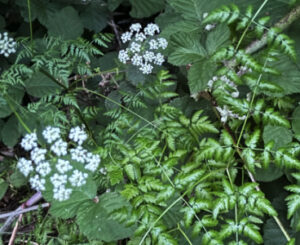
 It’s not rampant, but we have Hemlock (Conium maculatum) here and there in this area. It is a very poisonous plant. Here’s a bit about that from this Wikipedia page:
The total amount of poisonous alkaloids varies significantly with the age of the plant and between parts. The roots of young plants contain only traces of poison or none at all. The leaves of seedlings have lower levels of poison than slightly older plants. In the spring of the second year the leaves are highly toxic, though not as poisonous as the flowers or seeds later in the season. The hollow stems remain deadly for up to three years after the plant has died.
And of course, it is believed that Socrates killed himself in 399 BCE at the age of ~70 by drinking a concoction made of hemlock.
As hemlock is a very dangerous plant, it’s important to get rid of it, ideally when it is still young. Our first experience with Hemlock was with a 5-foot plant: getting rid of it before it was that huge would have been so much easier!
About a year after dealing with the 5-footer, I found two ~5-inch Hemlock plants beside my burn pile. As with any plant, when you dig it up you need to get as much of the root as possible or it may just come right back. In the case of one of these two, the root was 20 INCHES LONG!
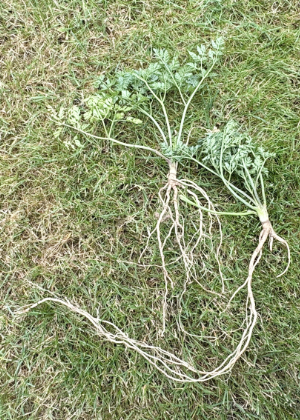 Once you’ve dug up the plant and as much of the root as you can, put all of it in a plastic bag (not your normal debris pile), securely tie the bag shut, and put it in the trash.
It is very common to mistake poisonous Hemlock with the non-poisonous Queen Anne’s Lace. The Along the Meadow site does a pretty good job of showing you the difference.
When I googled “how to dispose of poison hemlock” I found too many excellent resources to list here. I think the first thing for you to do is look for anything on your property that looks like Queen Anne’s Lace, check to see if the stem is purplish and if the leaves look like small ferns. If yes, then get your gloves and mask and get to work!